


Intense heatwave has claimed over 700 lives so far in Sindh province alone and shows no signs of relenting. Frequent power cuts have only added to the woes of the people in Karachi and other affected areas.
The Government on its part is contemplating use of Cloud Seeding Technology to generate artificial rain over parts of Sindh which are currently the worst affect from this calamity. Abdul Malik Ghauri, the Director General Ports and Shipping told the media that all the required arrangements for generating such artificial rainfall are in place, however he reiterated that no decisions have been taken yet. All stakeholders would have to be in consent for this plan to actually take effect.
The Director further added that even if a consensus was achieved, the implementation of this plan would not be possible till July 1st. He cited technical factors as the reason for this delay. Representatives attended the meeting regarding the viability of using the cloud seeding technology for generating artificial rainfall from the concerned agencies. These included the civil aviation, the maritime agency, the meteorological department, the Karachi Metropolitan Corporation, some business communities and by the commissioner of Karachi.
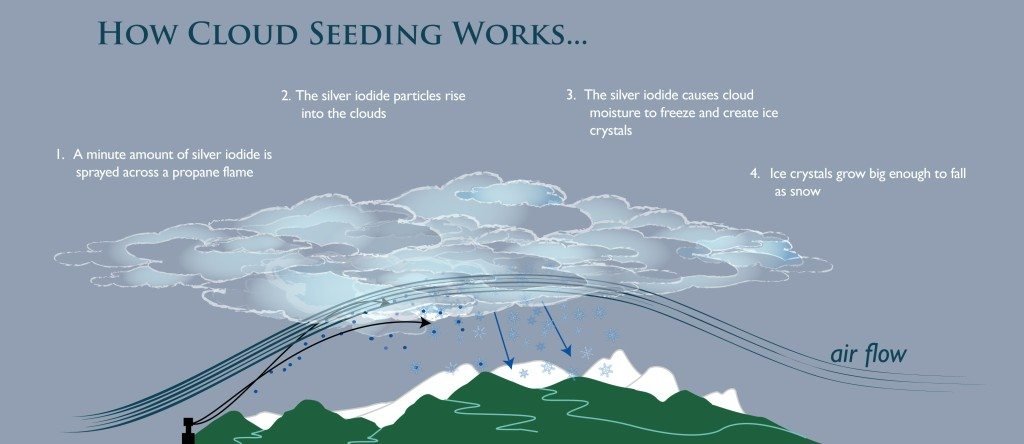

The cloud seeding technology involves the generation of artificial rains by using a sugar propelled rocket. Currently the government is looking to generate as much as 60 to 65 millimeter of rainfall. This is quite a challenging task considering that generally the Sindh region receives a total of around 176 millimeter of rainfall in a year. The clouds that would provide this rain are expected to be 2500 to 3000 feet above the ground. While this scheme definitely sounds promising there are some concerns raised by the meteorological department regarding the repercussions that such an artificial intervention would have on the environment.
Ghauri added that in case a consensus is reached and if the government has to really use the cloud seeding technology for rain generation, then it would have to take help from the aviation division of the Pakistani army to do so. He also talked about the fact that the neighboring countries of Pakistan have set up institutions that study the ‘cloud seeding’ technology in detail.
While the merits of using this technology might still be in question, there can be no doubt that any rainfall that comes its way would hugely benefit Karachi. The parts of the Sindh region that have borne the brunt of the current heat wave would benefit greatly by cloud seeding. However, apart from the environmental concerns, the cost incurred in this procedure would also be a prohibitive factor.
Abdul Qayyum Bhutto from the meteorological department affirmed that while the merits of the strategy are definitely being discussed, there are no final decisions taken yet. He further endorsed the concerns of his department regarding the effects that such a strategy could have on the environment. These effects are largely unknown and thus pose a bigger risk. While the cost factor would definitely play a big part in influencing the final decision, it is this threat to the environment that could actually be the deciding factor.