

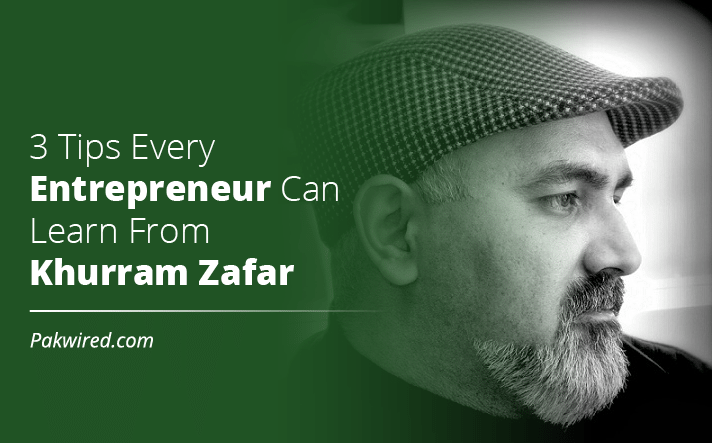
In Pakistan’s startup scene, Khurram Zafar is somewhat of a celebrity. A self-styled ‘entrepreneurship evangelist’ and with a very attractive resume (he has worked previously as the VP of Technology at eForce and the CTO at Epiance, in addition to setting up two successful businesses, and selling one of them), Khurram, simply put, knows what he’s talking about.
Having worked on both sides of the fence in terms of being a corporate employee and a startup owner, as well everything in between (Khurram is a popular angel investor, for example), the knowledge and experience Khurram posses is difficult to rival.
And by just looking at some of his successes today, there are three clear things all entrepreneurs can learn from Khurram Zafar.
1. Don’t ignore your entrepreneurial spirit
In 2007, Khurram left the US and returned to Pakistan. He wanted to spend more time with his family, and thought he wanted to escape the entrepreneur life by getting a salaried role.
Gaining just that as the CIO of the Lahore Stock Exchange, it didn’t take long for Khurram to realise he’d made a mistake. The salaried role was perfect for some – and had served him well previously – but he continually felt as though it was holding back his entrepreneurial spirit.
Shortly after, Khurram was instrumental in setting up the country’s first incubator programme, Plan9.
Plenty of people have been in the same boat as Khurram, thinking they’ll move to a salaried role for whatever reason. Sometimes it’s felt it would be a welcome change, other times it’s because the security of such a role is too much to turn down.
But if you have that flair and spirit of an entrepreneur, it’s very difficult to keep it hidden away. At some point, it will once again return to the surface – so why try and hide it in the first place?
Embrace it. If you have it, don’t ignore it, but utilise it to your advantage as much as you possibly can.
2. Understand there’s no need to go it alone
Although heavily involved in setting up Plan9, Khurram couldn’t have done it by himself at the time, and computer scientist Umar Saif was instrumental in its success.
Similarly, he worked closely with LUMS (Lahore University of Management Sciences), creating LCE (Lahore Center of Entrepreneurship) in the process, which invests in startups that appear destined for success.
When you’re involved in the startup community, there are swathes of people out there willing to collaborate and who are ready to help you in a variety of different ways. Don’t ignore them and think you need to go it alone.
This isn’t because you couldn’t – we’re sure many successful entrepreneurs who worked with others could have done it themselves – but why would you? Setting up a company in general is a time-consuming process, but when you’re at the startup stage developing products and service offerings, it needs more hands on deck than you have.
Sure, it may mean you have to give away a small percentage of your company in equity, but if you’re doing it yourself and struggling, no matter if you own 100% of the company, if you’re not bringing any money in, 100% of nothing is just that.
3. Keep your eggs in separate baskets
The focus of the LCE is to invest in a range of startup businesses. Receiving equity in return, the team identify those businesses most likely to be a success, with the key word here being the plural “businesses”.
It’s not one, but at least eight startups at any one time going through the four month incubation programme. The resources are divided and each startup is given the support they need to go on to become a success.
And although most will no doubt become active businesses, it’s unlikely they’ll all be incredibly lucrative. But to Khurram and LCE (with their financial heads on), this doesn’t matter – as long as one or two of them do.
Diversity is key within any business. Even if you’re targeting a really specific niche, the ability to offer multiple products or services to different audience segments ensures that if one income stream dries up, you still have the others to support you.
Take a look at Khurram’s own Twitter profile as a further example of diversity. He openly states he’s a ‘Executive Director’, ‘Investor’, ‘Entrepreneur’, ‘Teacher’, ‘Programmer’ and ‘Author’.
Now let’s assume Khurram decides to leave LCE as Executive Director. If he only had that role, he’d have to be on the look out for something similar relatively quickly to fulfil his income requirements. With five other hats he wears, however, he reduces the risk of suffering financially.
And this is exactly the same position all entrepreneurs should find themselves in.
By all means, invest heavily in one or two ideas you have, but think of the worst case scenario. What happens if those ideas don’t come to fruition. Then what?
Chances are you’ll have a multitude of skills, so why restrict yourself by just investing your time in one of them? Diversity is key.
A popular and much loved figure within the Pakistani entrepreneurial and startup scene, Khurram Zafar has a lot to give. Having a wealth of experience on all things startup (amongst many other subjects), as an entrepreneur in any part of the world, you could do a lot worse than taking some time out to read more on exactly what Khurram has achieved to date.