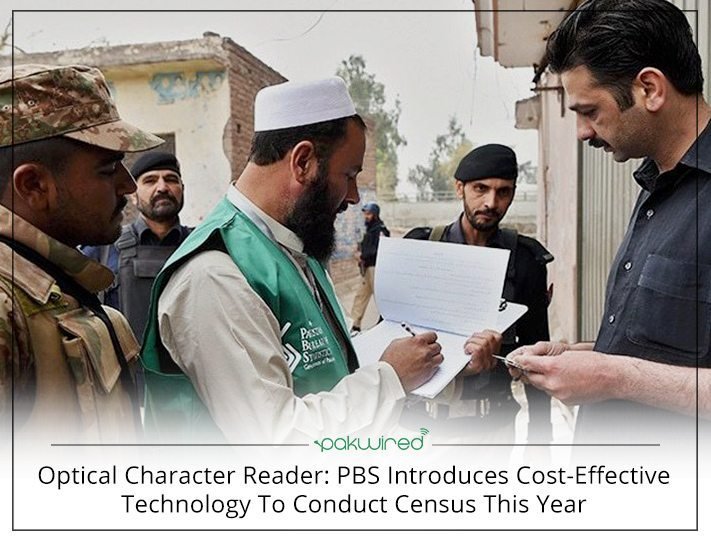
After nine years delay, a population and household census is finally being conducted in Pakistan. The format of data collection and analyzing through survey has changed significantly globally since the last survey of 1998. This time around, Pakistan Bureau of Statistics (PBS) launched efficient and cost-effective technology in the form of Optical Character Reader to conduct the census.
In the past, census has always been conducted manually using tangible forms by teams of enumerators and actuaries who carry out such censuses. However, the government has moved on from this archaic method of collecting and analyzing data about their population. Now the census is being conducted through online questionnaires, toll-free calling, and pre-paid envelopes.
According to the PBS, they won’t be using any of these methods in the 2017 census. PBS feels that these questionnaires provide no guarantee of being filled up and returned. PBS official highlighted that “literacy matters”.
Also Read: Roster of population census in Pakistan
Updated features in the Optical Character Reader
Although PBS is using manual data collection format, but they are also converting and transferring this data into computers through Optical Character Reader (OCR) technology. The OCR system uses alphanumeric recognition to convert printed or handwritten characters into machine-readable form at electronic speed. An updated version with an Intelligent Character Recognition (ICR) feature is available with the bureau that recognizes image data, in certain alphanumeric text. The updated feature converts handwritten or printed images into ASCII (machine-readable format). Moreover, the feature of input of data in Urdu language has also been added in the OCR technology.
Comparison between OCR and OMR
Besides converting text into computer language, the OCR technology also helps in reducing the cost. According to the United Nations Statistics Division, OCR image feature reduces up to 2% of the total census cost. It has also helps in reducing staff for data analysis. However, unlike the Optical Mark Recognition (OMR) technology used in 1998, the OCR is not as accurate. Therefore, data-entry operators at the bureau manually review all forms before converting. A number of 120 batches work as operators. Moreover, the OCR can automatically detect errors.
Unlike the Optimal Character Reader, the 1998 OMR innovation couldn’t perceive hand-printed or machine-printed characters. It required customized tangible forms to automate data input. Multiple choice questions used in examinations is a common example of OMR technology. These types of questions require answers to be marked on a special printed sheet with a special marker or a pencil. The OMR scanner is then used to read the data from the sheets.
Quick Read: If you have been out of Pakistan for last 6 months, census 2017 shall not include you
Statements of the officials
An official involved with the census proceedings in the planning phase, said that the committee also suggested the usage of tablet-based application to tabulate and collect data. He added that the advocates criticized that the tablet could neither count citizens bearing Computerized National Identity Cards (CNICs) nor it could collect data of unregistered citizens at National Database Registration Authority (NADRA). He said:
“Enumerators could have been linked to the NADRA system. The Punjab Information Technology Board (PITB) was willing to provide the technological expertise in this regard”
The suggestion couldn’t come to any final decision so it was dropped. Concerns about transparency, cost effectiveness and credibility of the software of the tablet were also raised. Another related official stated:
“There was not enough time to procure these devices and programme them to suit the needs of the census”
According to the PBS officials, there are two types of forms being used to collect data. Form 1 counts the houses whereas Form 2 counts households. According to the bureau, the count and data analysis would be completed in 2 months. This data will give a broad picture of the nation’s socioeconomic and will diminish dependence on projections and gauges just for the scope of exercises including limitations of electorates and circulation of seats in the parliament, advancement finances, and duty incomes and additionally prompt more educated strategies.